Winterizing Your RV in Snohomish, Skagit, and Whatcom Counties
October 7, 2026 · J&L Mobile RV Repair
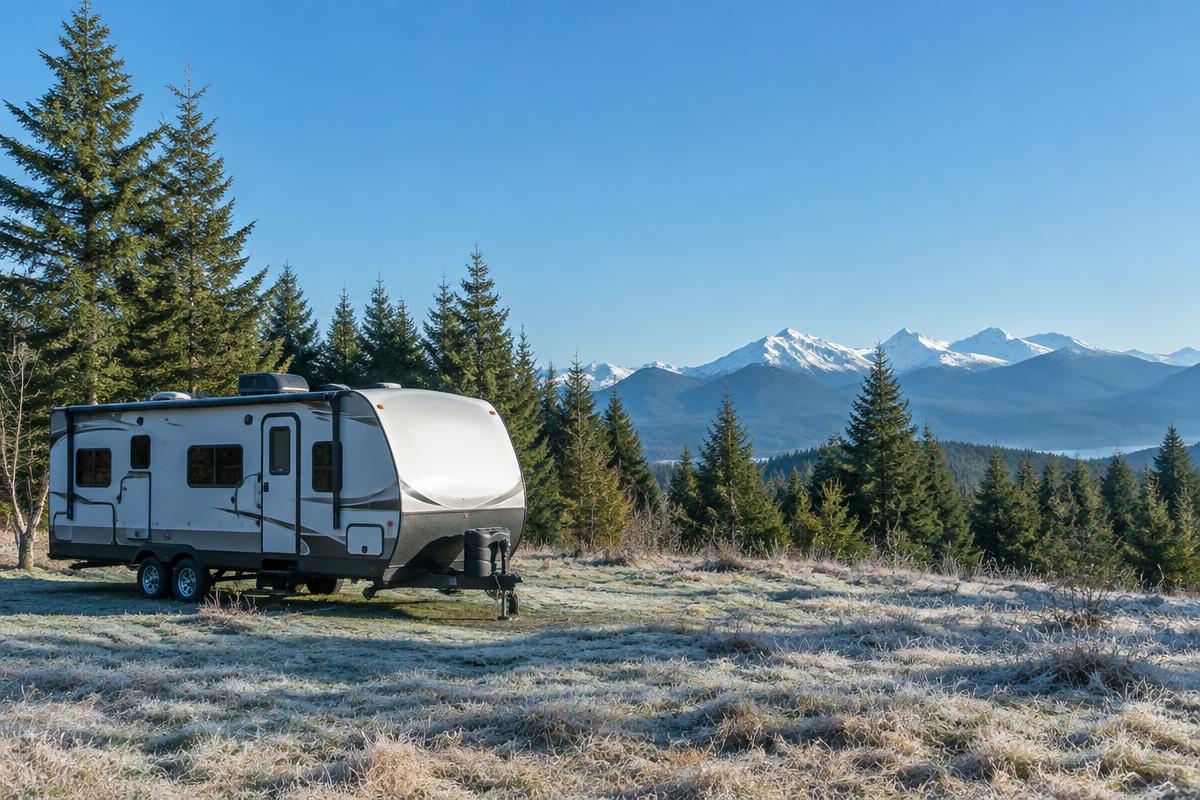
Mild winters, sudden freezes
Winters in the North Sound are usually more wet than cold. That lulls a lot of owners into skipping winterizing. Then an arctic blast drops down from Canada, temperatures fall well below freezing for a night or a week, and water left in the lines expands and splits them.
One cold night is enough. Water lines, fittings, the water pump, faucets and the water heater tank can all crack. Damage often stays hidden until spring, when you fill the system and find water under the floor.
Blowout or antifreeze?
There are two main methods. A blowout uses compressed air to push water out of the lines. Antifreeze uses pink RV antifreeze, which is made for drinking water systems, pumped through every line and fixture.
Many owners use both. Air removes most water, and antifreeze protects traps and anything air cannot fully clear. Never use automotive antifreeze in your fresh water system.
Bypass the water heater
A 6 or 10 gallon tank would take a lot of antifreeze to fill, and you do not need antifreeze in it. Most rigs have a bypass valve set that routes water around the heater. Drain the tank by removing the drain plug or anode rod, then set the bypass before pumping antifreeze.
If you have an on-demand heater, follow its own drain and bypass instructions. Those units hold water in a small heat exchanger that is easy to crack.
Steps most rigs follow
- Drain the fresh, grey and black tanks, and flush the black tank
- Turn off and drain the water heater, then set the bypass
- Open low point drains and every faucet to let water out
- Blow out lines with low pressure air, or pump antifreeze through until it shows at every tap, hot and cold
- Do not forget the outside shower, toilet valve, ice maker and washer if you have them
- Pour a little antifreeze into each drain trap
Battery care through winter
Cold and long storage both drain batteries. A flat battery can freeze and crack. Either keep it on a quality maintainer, or disconnect it and charge it every few weeks. Turn off the battery disconnect so small parasitic loads do not slowly drain it.
Keeping moisture and mold down inside
In our climate, moisture inside a stored rig is often a bigger problem than cold. Condensation forms on cold windows and walls, and mold follows.
- Prop cabinets and the fridge door open
- Use moisture absorbing products or a small dehumidifier if you have power
- Crack a roof vent slightly if it has a rain cover
- Check on the rig every few weeks and wipe up any condensation
De-winterizing in spring
When the risk of freezes has passed, flush the antifreeze out with fresh water, sanitize the fresh system, close the bypass, refill the water heater before turning it on, and check under sinks and around fittings for leaks. Run every tap until the water is clear.
When to call a pro
If you are not sure where your low point drains or bypass valves are, if you find leaks in spring, or if your water heater will not hold water after a freeze, get help before you use the system.
Want help winterizing?
Call or text J&L Mobile RV Repair at (855) 936-1457. We come to your rig across Snohomish, Skagit and Whatcom counties.