A breaker is doing its job
When a breaker trips, it is cutting power because it sensed more current than the circuit is built to handle, or a fault. That is protection, not a nuisance. The question is whether the cause is simple overload or something wrong in the wiring.
In the Northwest this comes up a lot in fall and winter, when space heaters, electric water heaters and coffee makers all run on the same chilly morning.
30 amp versus 50 amp
Most RVs are either 30 amp or 50 amp. A 30 amp rig has one 120 volt supply line rated for 30 amps total. A 50 amp rig has two 120 volt legs, each rated for 50 amps, which gives far more room.
If you have a 30 amp rig, everything you run shares that one 30 amp supply. That fills up quickly. If you plug a 50 amp rig into a 30 amp outlet with an adapter, you are limited to 30 amps too, even though your panel looks bigger.
What a normal routine can draw
Exact draw depends on the appliance, so check the labels on yours. As a rough idea, many RV air conditioners and microwaves each use a large share of a 30 amp supply. Electric water heaters, space heaters, hair dryers and coffee makers each add a big load on top.
That means a morning where the heater is running, the water heater is on electric, and someone starts the microwave can easily push a 30 amp rig past its limit. The main breaker or the pedestal breaker trips, and everything goes dark.
Overload or a fault?
- Overload usually trips only when several big appliances run at once, and stays fine when you stagger them
- A fault can trip with very little running, or the same circuit trips over and over
- Breakers that feel warm, outlets that are discolored, or a burning or hot plastic smell all point to a wiring problem
- Flickering lights or appliances that slow down under load can mean a loose connection
Loose wiring is a fire risk
RVs shake down the road for years. Screw terminals in outlets, breaker panels and the transfer switch can work loose. A loose connection heats up under load, and that heat can melt insulation and char the surrounding material. Sometimes the breaker trips. Sometimes it does not trip before damage is done.
If you notice heat, scorch marks or a smell, treat it as urgent. Shut off shore power and the battery disconnect, and get it checked before using that circuit again.
Campground pedestal problems
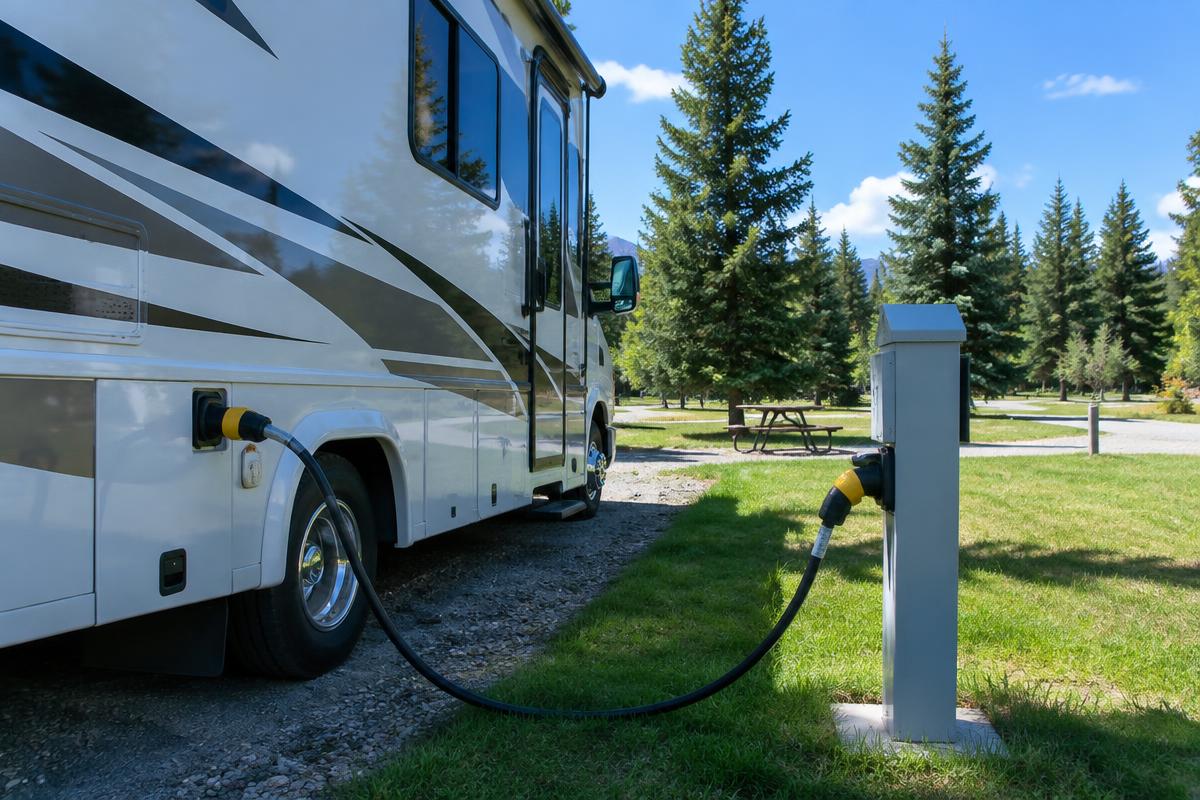
Not every trip starts inside your rig. Older campground pedestals can have worn outlets, loose connections or low voltage on busy weekends. A pedestal breaker that trips while your own panel stays on is a clue.
Look at your shore cord plug. Blackened or melted prongs often come from a worn pedestal outlet. A plug-in surge protector with a display can also show low voltage or wiring faults at the pedestal before you connect.
What you can try safely
- Turn off big loads, reset the breaker, then add appliances back one at a time
- Run the water heater on propane instead of electric when the heater or AC is on
- Do not run the microwave and a space heater at the same time on a 30 amp rig
- Try a different pedestal outlet if the campground allows it
When to stop resetting it
If a breaker trips with very little running, trips again right after a reset, or anything feels hot or smells burnt, stop resetting it. Leave that circuit off and call for help. Repeated resets on a faulty circuit can let damage build.
Breaker still tripping?
Call or text J&L Mobile RV Repair at (855) 936-1457. Tell us what was running when it tripped and we will take it from there.
Related service