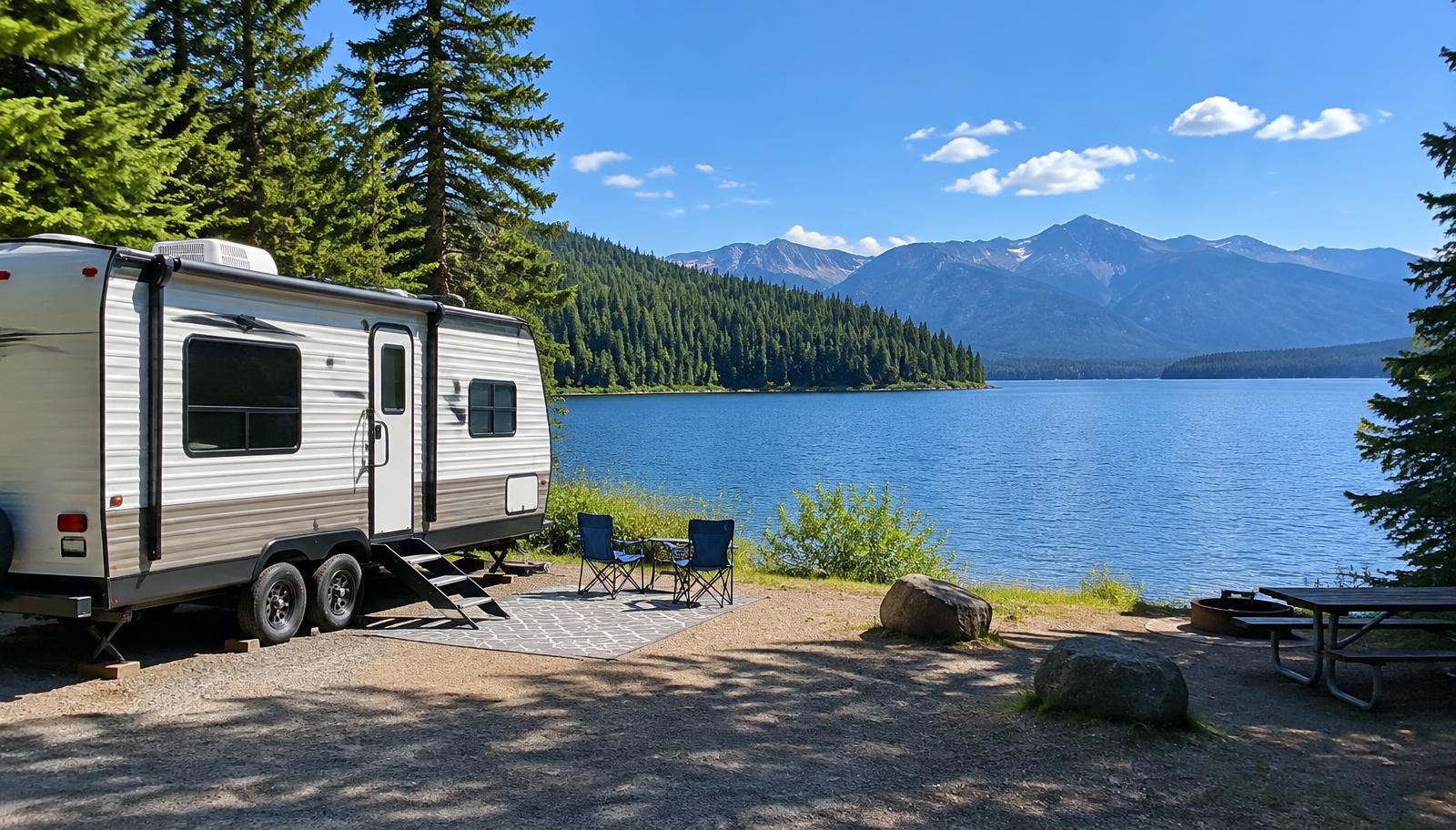
Northwest Rain and Your RV Roof: How to Catch a Leak Before It Rots the Ceiling
October 7, 2026 · J&L Mobile RV Repair
Why our weather is so hard on RV roofs
In Snohomish, Skagit and Whatcom counties, an RV roof is rarely dry for long between October and May. It is not the big storms that do the most harm. It is the slow, steady drizzle that sits on the roof for days and gives water all the time it needs to work into a hairline crack.
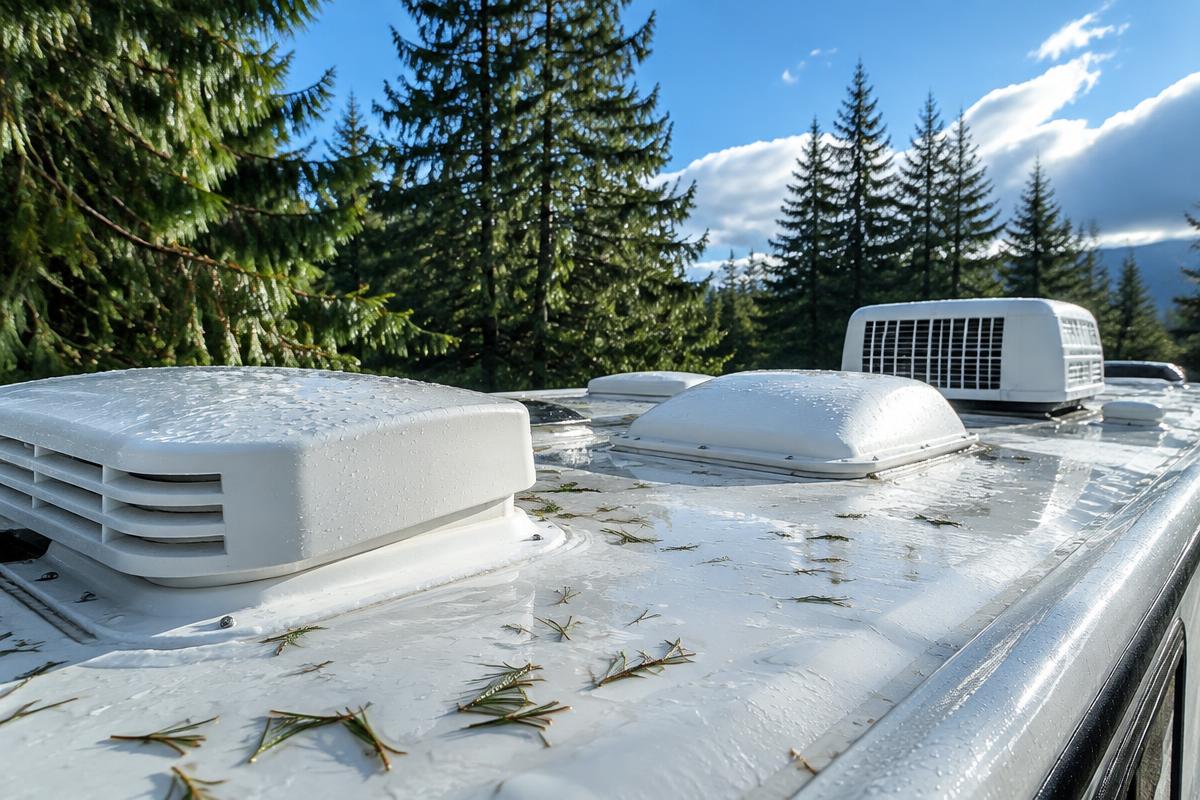
RV roofs are mostly flat and covered in openings. Every vent, skylight, antenna, ladder bracket and seam is a joint held shut by sealant. That sealant expands on a warm afternoon, shrinks on a cold night, and slowly loses its stretch. Once it cracks, water can creep in sideways under the membrane and travel a long way before it shows up inside.
That is why a ceiling stain is often a late warning. By the time you see it, the plywood decking or wall framing above it may have been damp for weeks.
Where leaks usually start
- Roof vents and fan housings, especially the corners where the flange meets the membrane
- Skylights, which have a long sealed edge and often sit over the shower where humidity is already high
- The front and rear caps, where the roof meets the curved end panels
- The air conditioner shroud and its gasket, which compresses over time and lets water drip down through the ceiling unit
- Side seams and the edge trim that runs the full length of the rig
- Screw heads on ladders, antenna mounts and solar brackets
Moss, needles and the trouble with parking under trees
Lots of RVs around here are stored beside the house under a big fir or cedar. The shade is nice in July, but all year long those trees drop needles, cones and bits of moss. On a flat roof they collect against vents and along the edge trim, hold water like a sponge, and keep the sealant wet long after the rain stops.
Moss is the bigger problem. Its roots can lift the edge of old sealant, and the constant moisture under it speeds up breakdown of rubber and TPO membranes. If you can see green on your roof, it has been wet for a long time.
Signs you can check yourself
You do not need to climb up to catch a lot of early problems. Start inside, on a dry day, with a flashlight.
- Look at the ceiling around every vent, skylight and the AC unit for rings, bubbles or yellowing
- Press gently on the ceiling and upper walls near the front and rear caps. Softness or a spongy feel means wet wood behind it
- Open upper cabinets and check the back corners for staining or a musty smell
- Look for peeling wallpaper or delaminated wall panels near windows
- If you can get up safely, check that sealant is still soft and fully bonded, with no cracks, gaps or lifted edges
How often to look
A good rhythm in Western Washington is twice a year: once in early fall before the rains settle in, and once in spring after the worst of the winter weather. If your rig lives under trees, sweep it off every few weeks during the wet season.
Look again after any windstorm. Branches can scrape or puncture a membrane, and a single gouge is enough to let water in.
Why a full reseal beats spot patching
When you find one cracked spot, it is tempting to put a dab of sealant on it and move on. The trouble is that all the sealant on the roof was likely put down at the same time and has aged the same amount. If one corner has failed, the rest is often close behind.
Spot patches also tend to go over old, dirty sealant. New material does not bond well to that, so the patch can peel within a season. A proper job removes failing material, cleans the surface, and reseals every joint so the whole roof is on the same clock again.
When to call a pro
Call for help if you find soft spots, if a stain keeps growing, if the roof feels spongy underfoot, or if you are not comfortable working at height. A wet roof is slippery and many RV roofs are not built to be walked on everywhere.
Need a hand with your roof?
J&L Mobile RV Repair comes to your rig across Snohomish, Skagit and Whatcom counties. Call or text (855) 936-1457 and tell us what you are seeing.
Related service